
CLASS Lab Logo Design
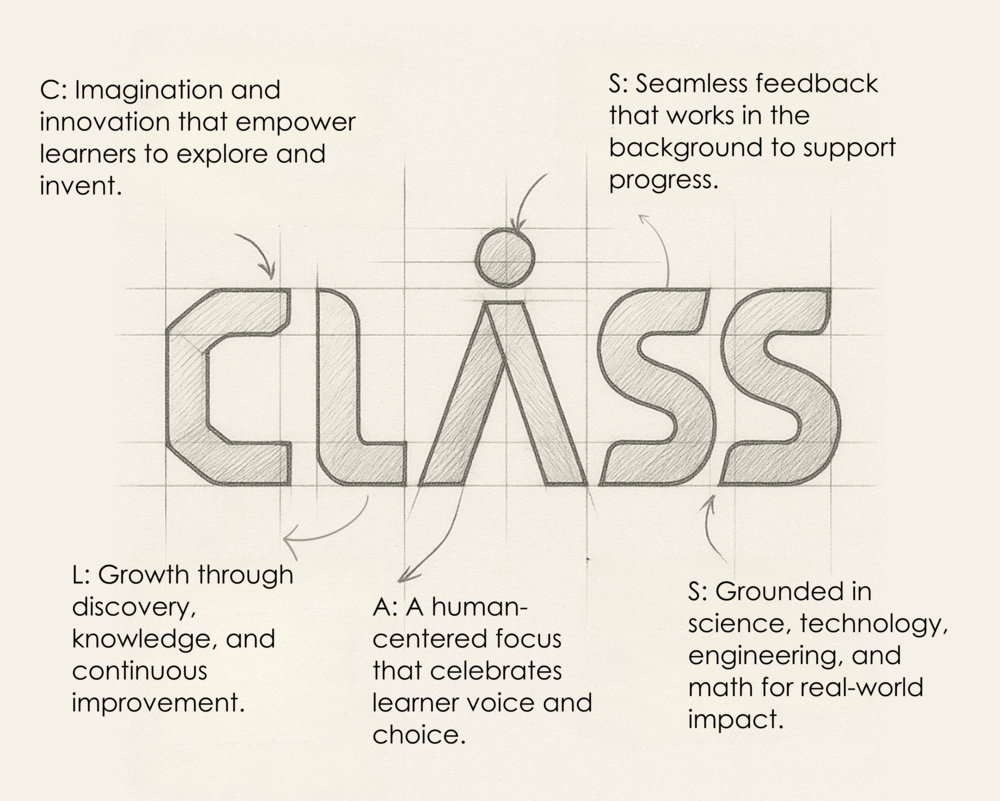
The CLASS Lab logo embodies our philosophy of human-centered creativity and AI-driven innovation. The ‘A’ represents a person, symbolizing learners at the core of our research. Its upward form reflects growth and discovery, while the blue gradient conveys trust and technology. The orange accent adds warmth and creativity, blending science and imagination in balance.
Research Areas
Our work spans embedded assessment, interactive physics learning, and creativity development grounded in evidence and built for real classrooms.
01
Stealth Assessment
Making learning visible through meaningful digital activity.
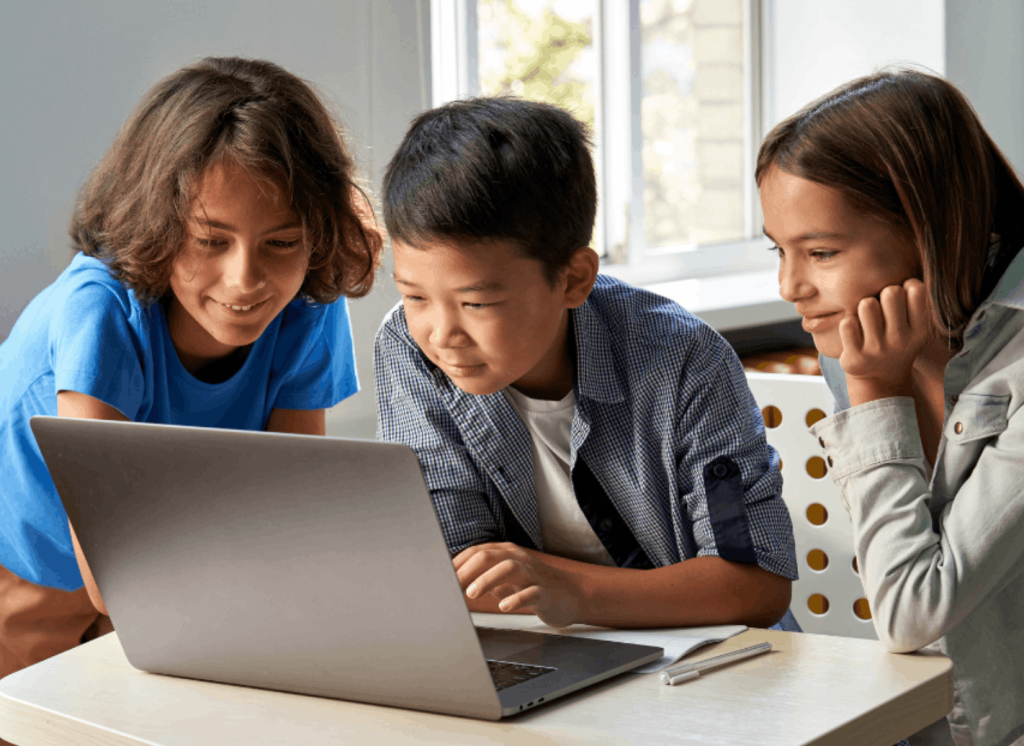
Stealth assessment is a core research area of CLASS Lab 2.0. We design theoretically grounded and psychometrically sound ways to infer what learners know and can do from the traces they naturally produce while solving problems, playing games, creating artifacts, or interacting with digital learning environments. Drawing on evidence-centered design (ECD), learning analytics, computational psychometrics, and increasingly AI and multimodal data, our work connects learner competencies to observable behaviors and uses those signals to support real-time formative assessment and personalization. Physics Playground has been an important testbed for assessing physics understanding and creativity without interrupting gameplay, and we have extended this work to contexts such as computational music remixing and other technology-rich environments. The goal is assessment that is ongoing, unobtrusive, valid, and useful for learning—not simply a test added after learning is over.
02
AI-Powered Learning
Designing safe and productive support for learners and teachers.
Our AI-powered learning research asks how artificial intelligence can strengthen learning without taking over the intellectual work learners and teachers need to do themselves. We design human-centered AI systems for feedback, coaching, assessment, problem generation, personalization, and instructional decision-making, with particular attention to learner agency, productive struggle, and educational safety. ProductiveMath illustrates this direction: it uses generative AI to help teachers design and evaluate mathematics problems for Productive Failure, support grouping and solution curation, and scale an approach that deliberately lets students struggle with challenging problems before instruction. Related work uses generative AI to assess and support creativity in environments such as Physics Playground and explores AI-powered learning games and adaptive supports. Across these projects, we treat AI as part of a carefully designed learning system—not an answer machine—with learning science, evidence, and human judgment guiding what the AI should and should not do.
03
Creativity & Durable Skills
Developing capabilities that remain valuable amid change.
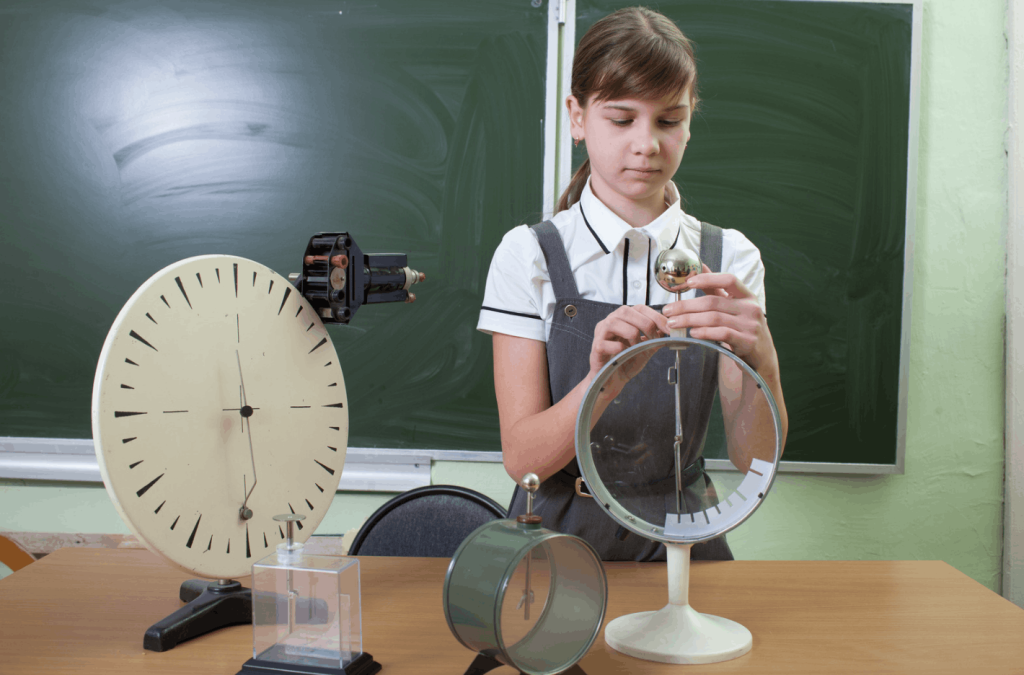
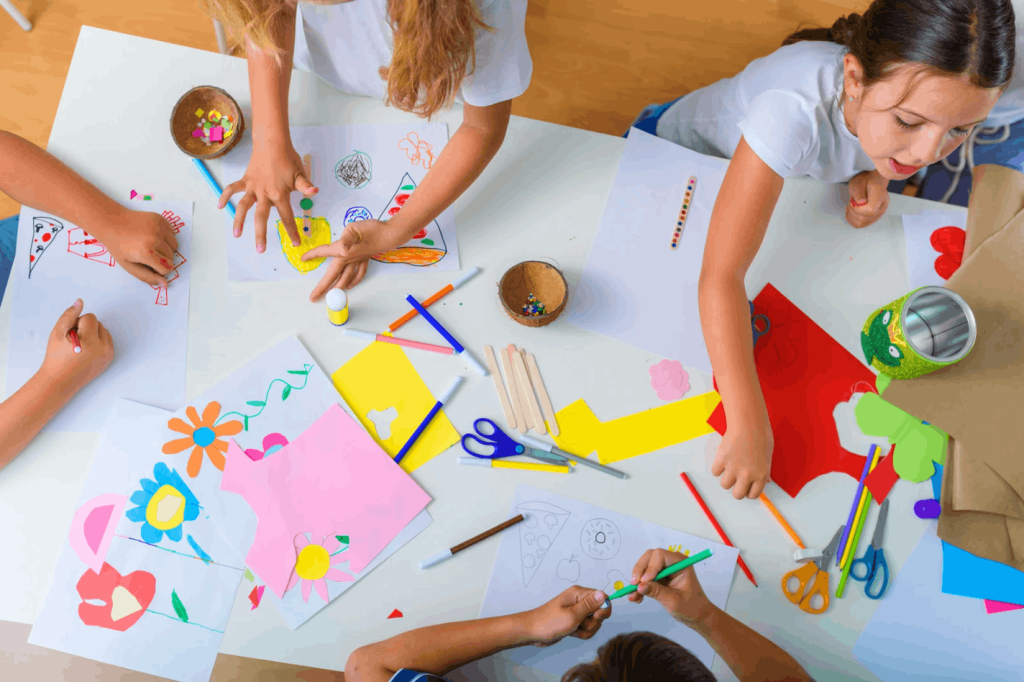
CLASS Lab 2.0 studies how learning environments can develop and assess capabilities that remain valuable even as technologies, jobs, and social contexts change. Creativity is a long-standing focus of our work, from game-based assessment and support of creative thinking to studies in Physics Playground, Minecraft, computational music remixing, and generative-AI-supported creativity assessment. We are extending this agenda to a broader family of durable skills, including critical thinking, problem solving, computational thinking, growth mindset, executive functions, persistence, collaboration, agency, and AI literacy. Rather than treating these skills as abstract traits measured by decontextualized tests, we investigate how they emerge through authentic activity and how digital games, intelligent supports, productive failure, and carefully designed AI interactions can help learners practice them. A central question is how technology can augment human creativity and thinking while preserving authorship, judgment, effort, and the capacity to generate ideas independently.
04
Lifetime Learning
Preparing people to adapt, recover, grow, and thrive across life.
Lifetime learning provides the broader horizon for our research. As AI accelerates changes in work, education, and everyday life, we are interested not only in what someone learns in a particular course, but in the capacities that help people continue learning, adapting, and growing across different stages and contexts of life. This includes durable skills, critical AI literacy, self-regulation, agency, transfer, and the ability to decide when to use AI, when to question it, and when not to delegate important thinking. It also requires learning ecosystems and human-centered AI tools designed to protect productive struggle and support development rather than cognitive dependency. Across projects such as Physics Playground and ProductiveMath, our larger aim is to design experiences and infrastructures that help people become more capable learners over time—able to recover from failure, respond to new challenges, and use emerging technologies in ways that expand rather than diminish human potential.